Walpole MA Investment Property Options and Insights
July 9, 2026
July 9, 2026
If you are thinking about renting out a property or buying an investment home in Walpole, the biggest question is simple: will the numbers and the lifestyle appeal line up? In a town where most homes are owner-occupied and housing costs run higher than the state median, you need a careful, local strategy. This guide will help you understand Walpole’s rental profile, likely investment opportunities, and the practical details that can shape your next move. Let’s dive in.
Walpole is about 19 miles south of Boston and 26 miles north of Providence. The town describes itself as a growing bedroom community with a stable mix of commercial and industrial land uses, which supports its commuter-friendly suburban identity.
Recent Census estimates show a population of 26,237, with an owner-occupied housing rate of 83.5 percent. That means renter-occupied housing makes up a much smaller share of the market, about 16.5 percent of occupied housing. For you as a buyer or investor, that points to a town where rental opportunities exist, but they are not as abundant as in denser urban markets.
Housing costs in Walpole also sit above Massachusetts overall. The median gross rent is $2,205, the median owner-occupied home value is $687,100, and the median household income is $171,500. Compared with statewide figures, Walpole is more owner-heavy and higher-cost, which can support stability but may limit easy cash flow.
Walpole’s rental demand is shaped by its suburban setting and commuter access. The town and school district both highlight connections to Boston and Providence, and those transportation links have helped make Walpole increasingly popular with commuting professionals.
Local demographics also help explain demand patterns. About 25.1 percent of residents are under 18, 16.9 percent are 65 or older, and 67.4 percent of adults age 25 and older have a bachelor’s degree or higher. These numbers suggest a mix of households that may include professionals, families, and downsizers looking for convenience and stability.
Another important sign is turnover. Census data show that 94.6 percent of residents lived in the same house one year earlier, which points to a relatively stable housing base. If you are evaluating a rental or investment purchase, that may mean a less transient tenant pool, but also fewer openings and less frequent inventory turnover.
If you are searching for an investment property in Walpole, the local housing mix matters a lot. The FY2026 assessment roll is dominated by 6,636 single-family homes and 1,349 condos.
Smaller multifamily inventory is much more limited. The same assessment roll lists 195 two-family properties, 37 three-family properties, and 44 apartment accounts. In practical terms, that means you may find fewer turnkey multifamily opportunities here than in more densely built Greater Boston communities.
For many buyers, the most realistic paths may include:
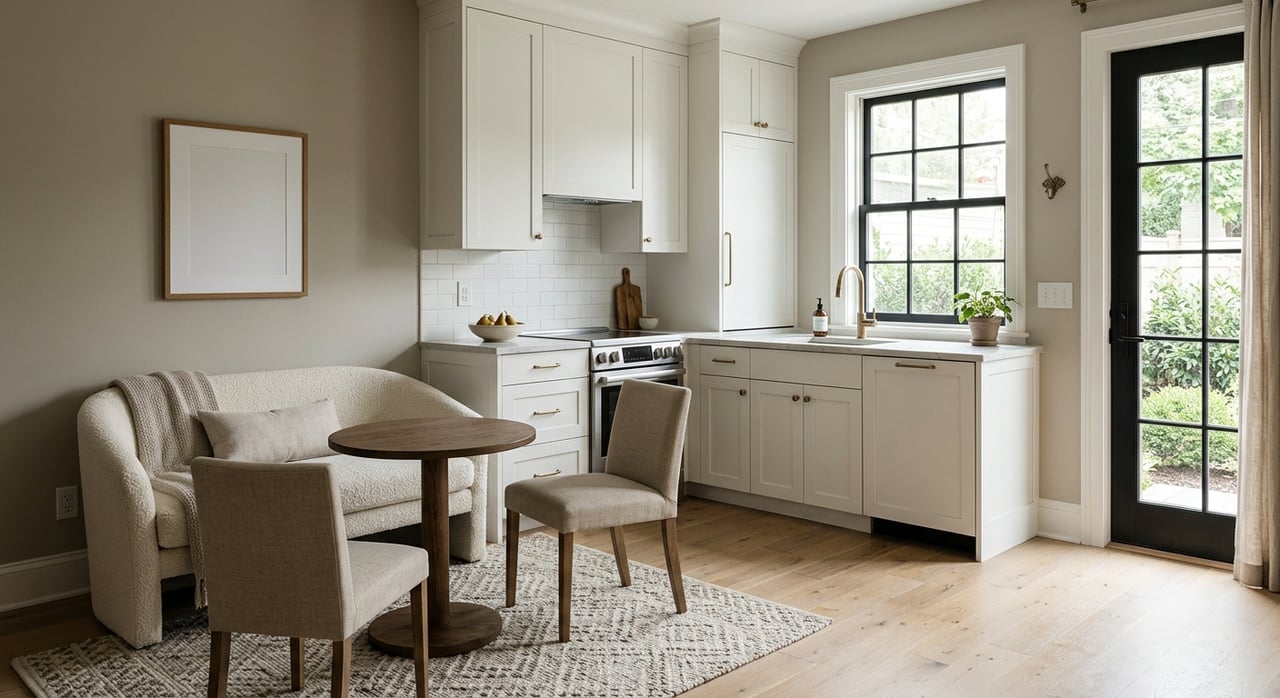
Walpole’s zoning bylaw allows one accessory dwelling unit by right on a single-family lot. The ADU is capped at 900 square feet, and short-term rentals inside the ADU are not allowed.
This matters because ADUs can create useful flexibility for owners and investors. Depending on the property, an ADU may support long-term rental income, multigenerational living, or future housing needs without requiring a larger multifamily purchase.
There is also a parking detail worth noting. If the ADU is within half a mile of a commuter rail or bus station, no additional parking space is required for the ADU. That can make certain locations more attractive when you are comparing lots or redevelopment potential.
Walpole also has an MBTA Communities Multifamily Overlay District intended to allow multifamily housing development under Section 3A. For longer-horizon investors, this can be relevant when evaluating future density potential.
That said, overlay districts do not make every parcel interchangeable. Zoning, dimensional rules, parking requirements, and parcel-specific conditions still matter. If you are exploring a multifamily angle, it is wise to treat Walpole as a market for selective opportunities, not broad-brush assumptions.
One of the clearest takeaways in Walpole is that you should underwrite carefully. Using the Census median gross rent of $2,205, annualized rent is about $26,460. Compared with the Census median owner-occupied value of $687,100, that works out to roughly a 3.9 percent gross rent-to-value ratio before taxes, repairs, vacancy, insurance, and financing.
This is only a broad benchmark, not a guarantee for any specific property. Still, it signals that Walpole has a higher-cost suburban profile where appreciation potential, stability, and flexibility may play a larger role in your decision than immediate cash flow alone.
If you are comparing towns, this is where financing awareness becomes especially important. Purchase price, rate structure, carrying costs, and renovation scope can quickly change whether a property feels strategic or stretched.
In Walpole, property taxes should be part of your first-pass review, not an afterthought. The FY2026 residential tax rate is $12.45 per $1,000, while the commercial, industrial, and business personal property rate is $16.81 per $1,000.
The town report lists an average single-family assessment of $831,005 and an average single-family tax bill of $10,350. It also notes that the average assessment rose 5.97 percent year over year, while the average tax bill increased by $285.
For you, that means even a property that seems workable on paper may look different once taxes are layered in. A careful review of current assessment, expected expenses, and your financing terms is essential before you make an offer.
If your investment plan includes updates, conversion work, or preparing a rental unit, check the permitting path early. Walpole states that all building permits, both residential and commercial, are handled entirely online.
The building department also handles plumbing, electrical, and gas permits and inspections. That can be helpful for process visibility, but it also means you should confirm requirements up front rather than assume a project will be routine.
This is especially important if you are considering:
Not every opportunity is about the structure alone. Walpole’s zoning bylaw includes a Flood Plain Protection Overlay District, and the flood insurance rate maps cited in the bylaw are dated July 8, 2025.
Recent zoning work in town has also focused on dimensional regulations, parking, nonconforming uses, ADUs, and floodplain updates. For you, that means parcel-specific due diligence is essential, especially if a property sits near waterways or lower-lying land.
A home that looks promising from a listing sheet may carry added design, insurance, or permitting considerations. That does not mean it is a bad investment, but it does mean you should verify details before building your financial plan around assumptions.
Walpole can be a strong fit if you value stability, commuter access, and a more suburban rental profile. It may be especially appealing if you are looking for an investment that aligns with long-term ownership rather than quick, high-yield expectations.
In many cases, the strongest match may be a buyer who wants one of the following:
This market may be less ideal if your main goal is chasing easy cash flow from abundant lower-cost inventory. Walpole appears to reward patience, planning, and realistic expectations.
If you are serious about rental or investment options here, a clear decision framework can help. Start by looking at the property type, zoning fit, carrying costs, and likely rent range before you get attached to a listing.
Then pressure-test the numbers with a conservative lens. In a town where rental stock is limited and home values are relatively high, your margin for error may be smaller than it looks at first glance.
A simple checklist can help:
With the right strategy, Walpole can offer durable value. The key is matching the property to your goals rather than forcing the market to behave like a different kind of town.
If you want help sorting through Walpole rental or investment opportunities with a practical, financing-aware approach, Kiky Papadopoulos can help you evaluate your options with clarity and confidence.
Stay up to date on the latest real estate trends.
Get assistance in determining current property value, crafting a competitive offer, writing and negotiating a contract, and much more. Contact Kiky today to discuss all your real estate needs!